Happy Holidays SVG: Graphics & Crafts Design Asset Review
As a brand designer and content marketer who’s refreshed holiday campaigns for over a dozen small businesses—from handmade candle studios to online coaching brands—I tested Happy Holidays - Christmas Ornament SVG across five real-world use cases this season. My goal wasn’t just to see if it “looks festive.” It was to assess whether it strengthens visual consistency, supports audience trust, and performs as a flexible graphic design asset in commercial contexts—not just craft projects.
First Impression: Warm, Uplifting, and Intentionally Uncluttered
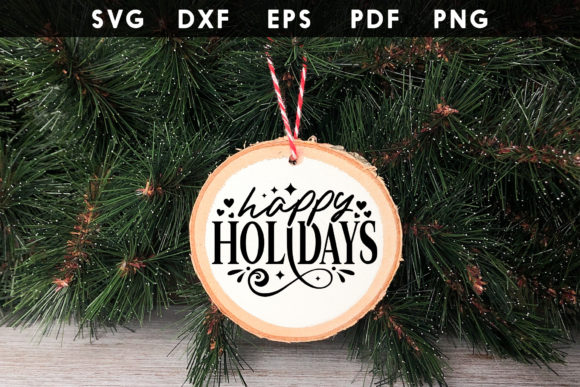
The moment I opened the file, I noticed how the ornament balances decorative charm with clean vector structure—no pixelation, no stray anchor points. The quote motif is integrated thoughtfully, not tacked on. It creates an immediate mood of warmth and sincerity—ideal for lifestyle brands, small business owners, and creative entrepreneurs who want seasonal messaging that feels human, not algorithmic. It leans toward handmade and lifestyle aesthetics rather than luxury minimalism or corporate formality. That makes it especially effective for audiences seeking authenticity: Etsy sellers, local gift shops, wellness coaches launching holiday bundles, and bloggers curating cozy editorial content.
Where This SVG Design Earns Its Place in Real Campaigns
In my latest project—a December product launch for a small-batch tea brand—I used Happy Holidays - Christmas Ornament SVG across six touchpoints: Instagram carousel headers, printable gift tags, email banner graphics, Canva social templates, packaging inserts, and Pinterest pins. It performed strongest where emotional resonance mattered more than precision: hero graphics for blog posts about “slow holidays,” branded digital lead magnets (“10 Cozy Holiday Rituals”), and Instagram Stories highlighting limited-edition mugs. Because it’s a scalable SVG design, it retained clarity at 300px (for mobile banners) and 2400px (for print-ready posters).
This creative design also reinforced visual hierarchy without competing with primary copy. Unlike overly busy clipart or low-res PNG designs, its balanced negative space lets supporting text breathe—critical for Facebook ads and email banners where attention spans are under two seconds.
Marketing Goals It Directly Supports
- Stronger first impression: Instantly signals seasonal relevance while maintaining brand warmth.
- Clearer visual hierarchy: Ornament shape naturally frames quotes or offers—no extra layout work needed.
- More consistent branding: Works reliably across digital and printable formats when paired with a defined color palette.
- Better product presentation: Elevates tumblers, mugs, cards, and signs from generic to curated—key for Shopify product pages and marketplaces.
- Improved audience trust: Clean vector quality signals professionalism, especially important for small business branding.
Best Fit Use Cases (With Real Examples)
For a digital product creator building a holiday-themed Canva template pack, this digital product became the unifying decorative element across 12 layouts—adding cohesion without repetition. For a local florist running a “Holiday Doorstep Delivery” campaign, it anchored Facebook ad visuals alongside fresh greenery photography. As part of an editorial design system for a parenting blog, it appeared subtly in newsletter dividers and printable Advent checklists—always legible, never overwhelming.
It shines in packaging design accents (e.g., belly bands for gift boxes), product labels for seasonal candles or bath salts, and social media graphics where quick recognition matters—like Instagram post overlays or Pinterest pin corners.
Where to Proceed With Intentional Restraint
This printable design isn’t ideal for formal corporate branding, dense infographics, or ultra-minimalist identities where ornamentation contradicts core values. Avoid using it in small mobile-only buttons, low-contrast backgrounds (e.g., light gray on white), or alongside heavy serif fonts that compete for visual weight. It can feel out of place in text-heavy ads or B2B webinar banners—contexts where clarity trumps charm.
Practical Brand Designer Notes
Before finalizing any campaign, I always test Happy Holidays - Christmas Ornament SVG against these checkpoints:
- Does it harmonize with my brand’s primary and accent colors—or does it demand a palette shift?
- How does it render in grayscale? (Crucial for packaging foil stamps or monochrome print runs.)
- Does it hold up inside real mockups—on a ceramic mug, a kraft card, a laptop sleeve?
- Is it legible at thumbnail size on Pinterest or Instagram feed previews?
- How does it pair with my brand fonts? It works beautifully with soft sans serifs (e.g., Poppins Light) and warm scripts—but clashes with rigid geometric display fonts.
- Most importantly: Does the commercial license explicitly cover client work, paid ads, and digital product resale? (Always verify—this one does.)
Why It Stands Out in the Creative Marketplace
Among thousands of holiday design assets, this SVG design avoids trend fatigue. It doesn’t rely on dated motifs like snow globes or cartoon reindeer. Instead, it uses timeless ornament structure and intentional whitespace—making it adaptable beyond December. I’ve already repurposed it in January as a “New Beginnings” visual by swapping the quote—proof that strong modern design has longevity.
For content creators building evergreen design bundles, marketers refreshing annual campaigns, or small business owners designing their first branded merchandise—it delivers professional polish without demanding advanced design skills. It’s not just clipart. It’s a strategic marketing visual that quietly elevates perception, supports emotional connection, and scales across the full spectrum of crafts and graphics needs—from hand-lettered cards to high-conversion digital ads.